

 International Architecture Schools Competition
Stairs Design Award 2020, the second edition of the international competition for architecture students
2020 edition : The numbers
150
Teams
24
Schools
5
Countries
The ceremony
Due to COVID-19, the ceremony was held remotely via a live stream on September 3, 2020. The finalists presented their projects through video, allowing the competition to successfully take place.
The Prestigious Jury

Laurent Thevenet
Jury president
Président du comité particulier NF Escalier

Patrick Montagné
Jury member
Directeur activité béton
Mapei

Céline Martin
Jury member
Architecte
Yellow Architecture

Pierre-Etienne Miny
Jury member
Syndicat architecture
Architecte
Enseignant

Antoine Renaud
Jury member
Architecte
Directeur d’étude ENSAV

Benjamin Drossart
Jury member
Architecte
Enseignant DND

Sally Stone
Jury member
Enseignante d’architecture

François Texier
Jury member
Architecte ERP
Enseignant
The winners
Scott Benetto, 1st prize winner
1st prize : Ascension Vertebrale
Scott Benetto
Ensa Grenoble
Niveau d’étude : BAC +6
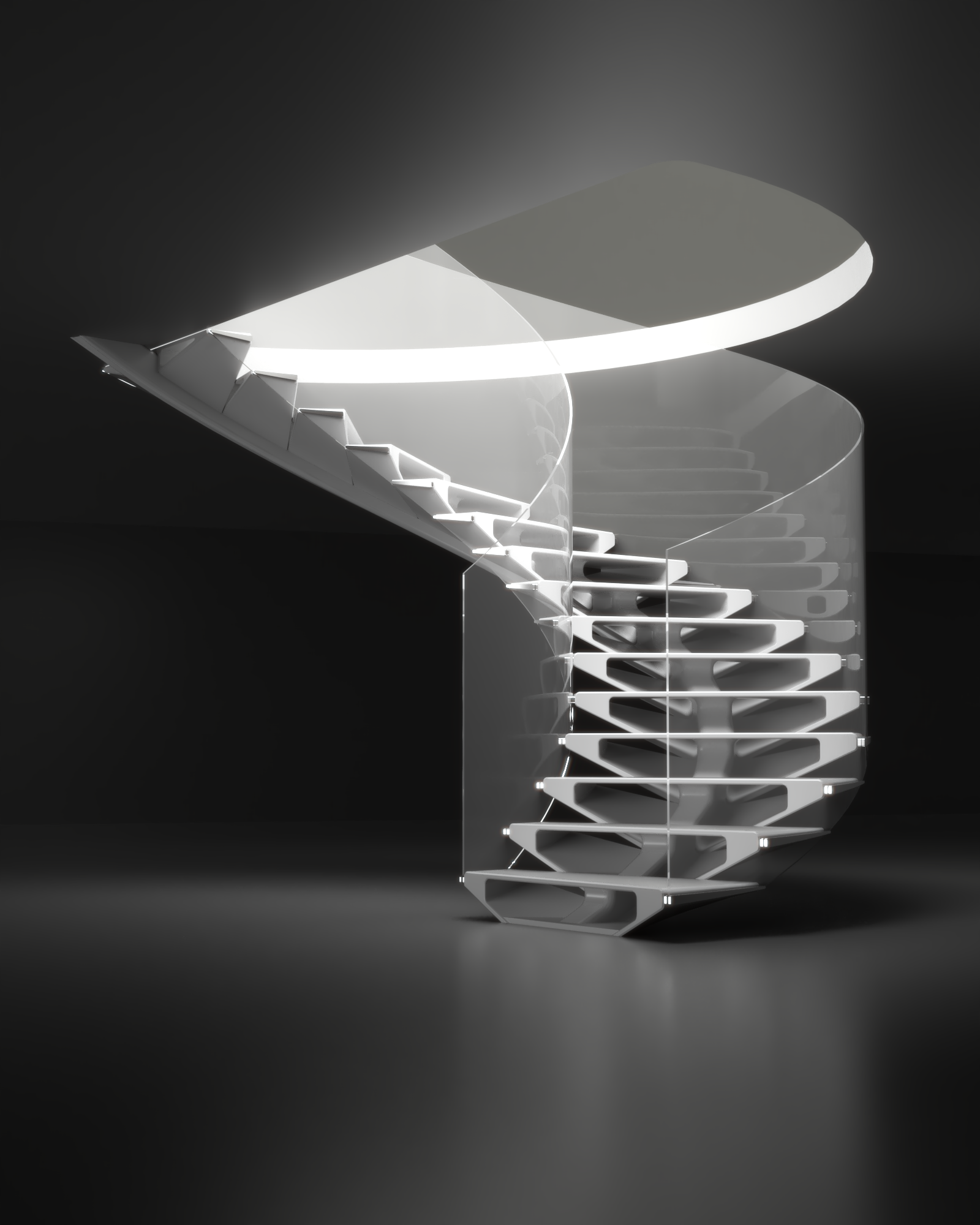
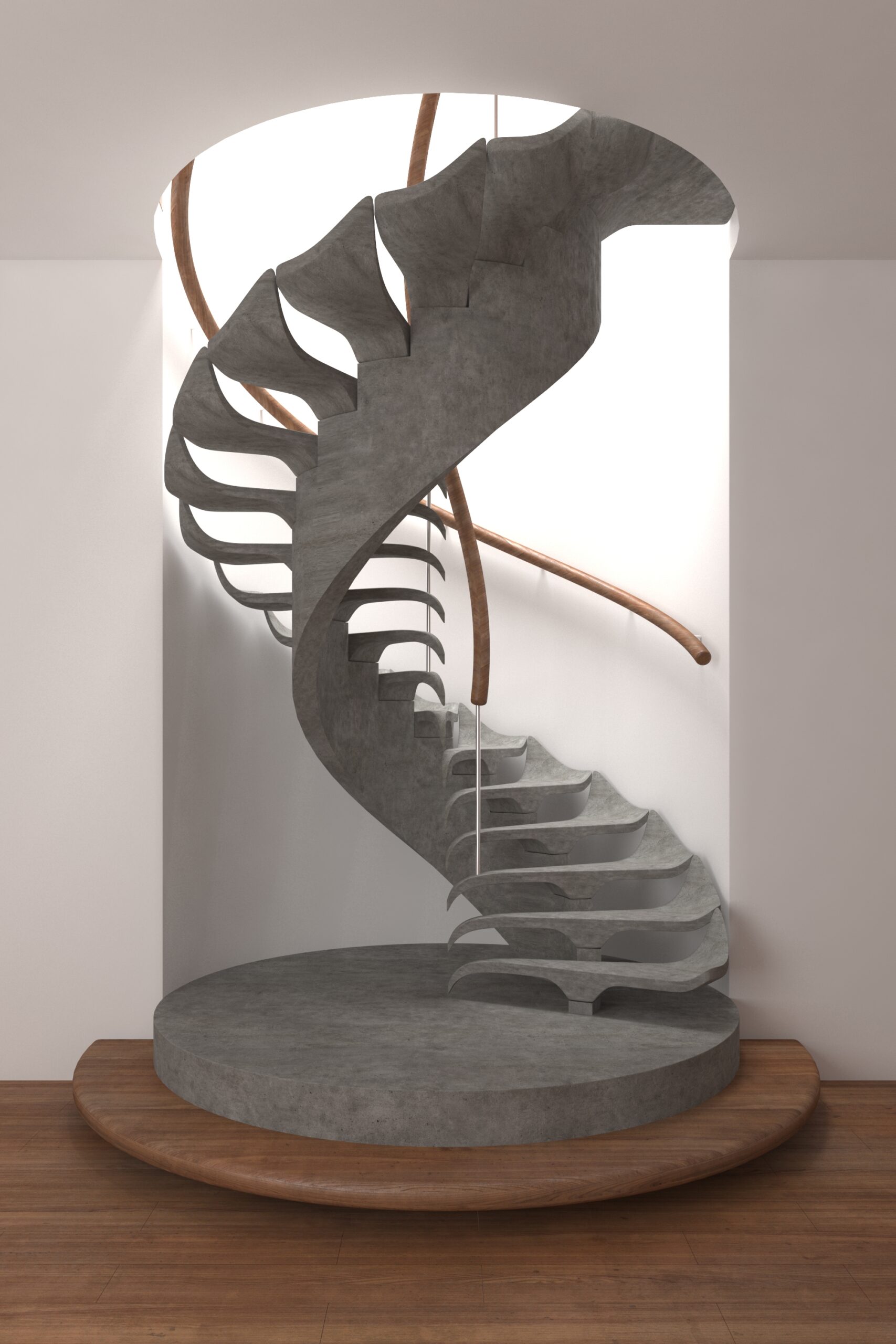
Inspired by biomechanics, the project is based on the structural principle of a spine. Along a helical concrete beam, « vertebrae » (the term chosen to designate the steps) rest against one another to form a complete staircase system. Each step consists of a module that can be replicated indefinitely. Made of UHPFRC (Ultra-High-Performance Fiber-Reinforced Concrete), it is carefully designed to optimize the amount of material used from a sustainability perspective. The core of the modules is hollowed out to reduce mass, creating a graphic, almost weightless aesthetic.
Cloé Letellier, Elio Salomon et Killian Rivault, 2nd prize winners
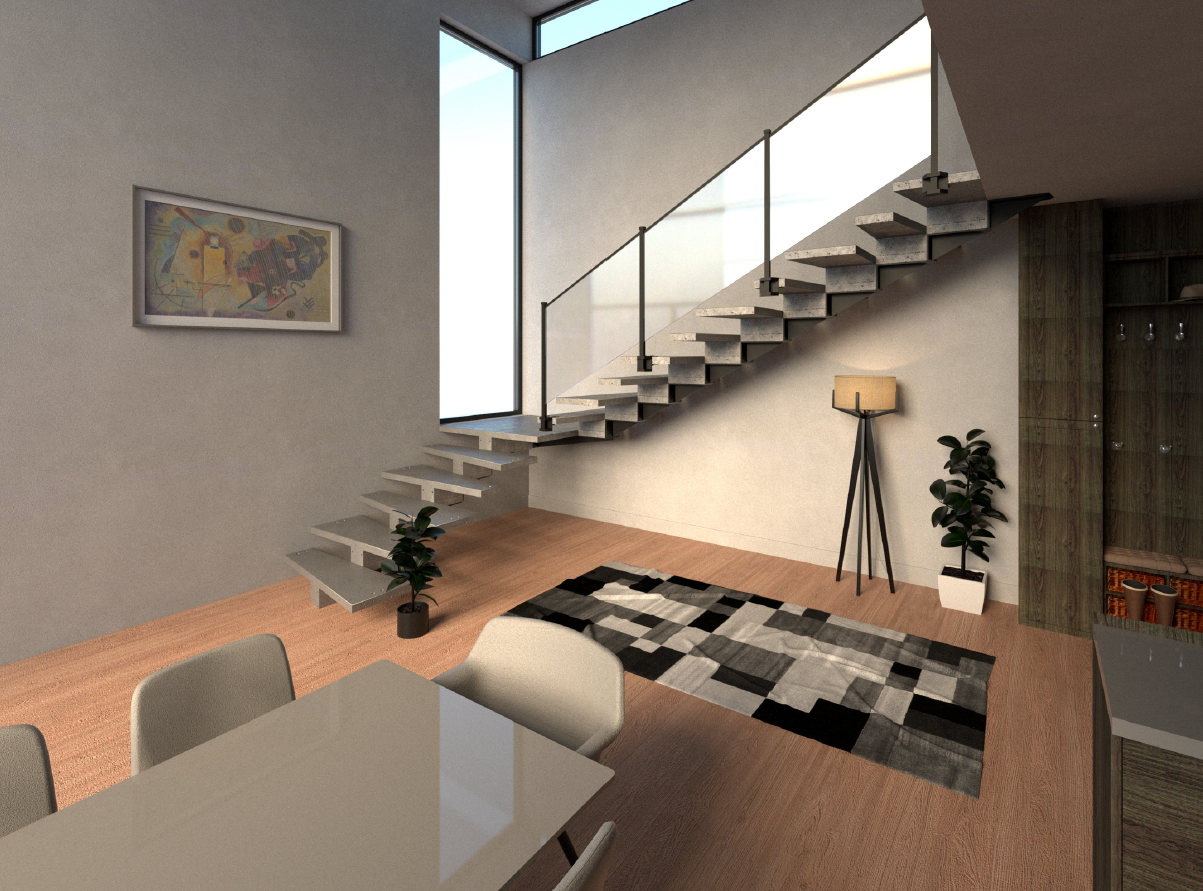
2nd prize : Binaire
Cloé Letellier, Elio Salomon et Killian Rivault
ESAIL Lyon
Niveau d’étude : BAC +2
Safaa Korrich et Christophe Desmazure, 3rd prize winner
3rd prize : Peel Concrete
Safaa Korrich et Christophe Desmazure
MJM Graphic Design
Niveau d’études : BAC +4
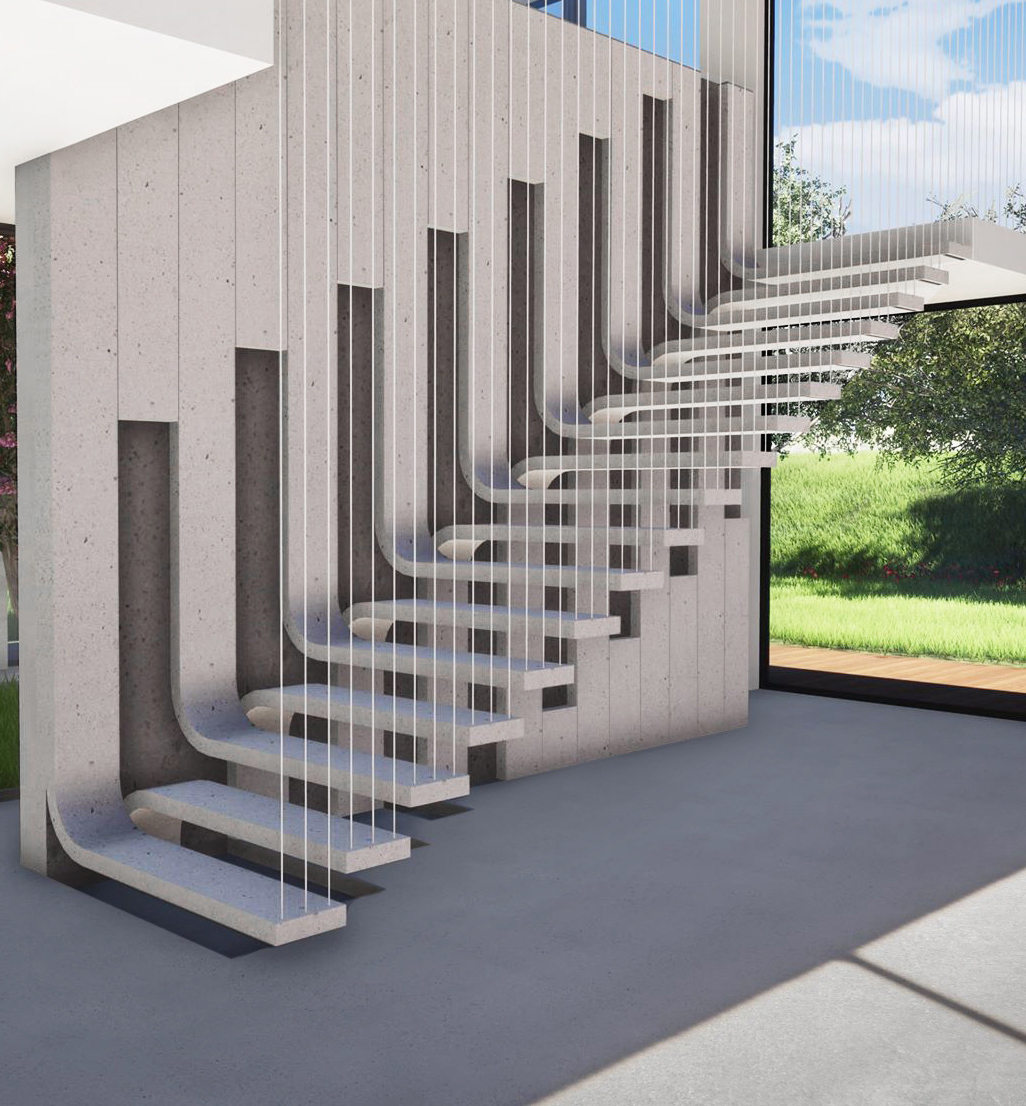
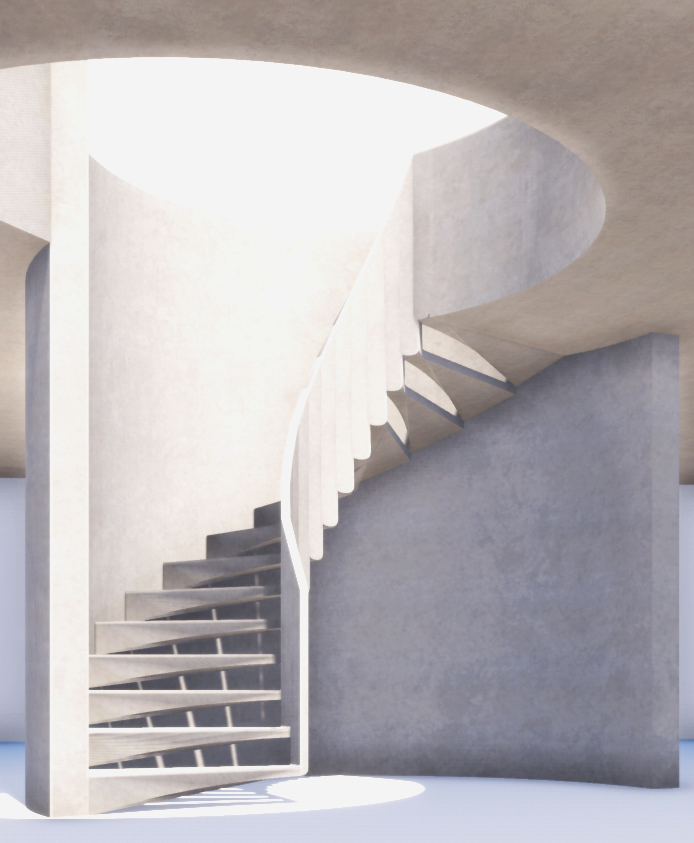
Born from a very simple idea—that of a concrete wall being peeled away layer by layer— »Peel Concrete » is a staircase that is both graphic and minimalist.
Although made entirely of concrete, we sought to bring a sense of flexibility and lightness to a material that is traditionally rigid and massive.
A system of factory-prefabricated modules simplifies installation through an interlocking mechanism. The suspended wire-rope railing reinforces this concept of lightness while increasing the structure’s physical strength.
Shanice Aka-Adjo et Olga Golliet, PBM prize winner
PBM prize : Moment présent
Shanice Aka-Adjo et Olga Golliet
Haute École du Paysage, d’Ingénierie et d’Architecture HEPIA
Niveau d’étude : BAC +3
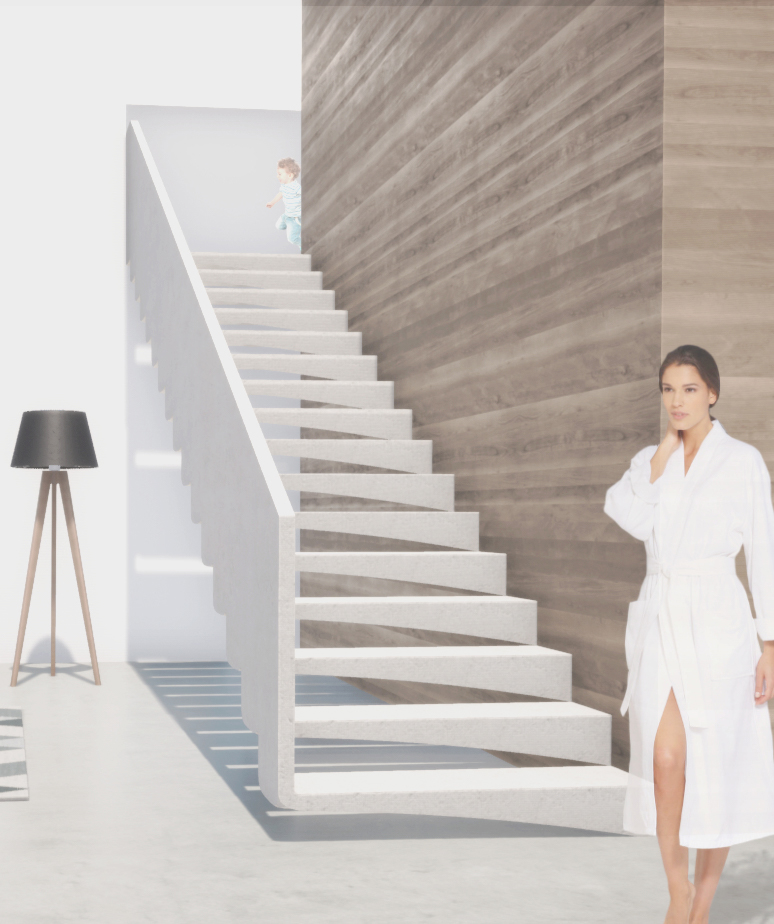
Getting back to basics, living in the moment. How can we use a staircase to disconnect, if only for a few seconds?
Through this project, we advocate for a return to the very essence of the object, pushing the reflection on « what we have right now » to its absolute limit. A staircase, no matter how innovative, must not fail its primary function: moving from one level to another.
We therefore based our concept on its core definition—creating a simple element that retains its original purpose while blending design and science. By pushing the material to its absolute limits, the form naturally reveals itself.
We view the staircase as something that belongs entirely to its context and the space it occupies; it is this synergy that creates a whole. This is why we chose to design a semi-recessed staircase, allowing it to adapt into various forms.
Mélis Cetin, winner of the public choice award.
Public choice award : Fossil
Mélis Cetin
University of East London
BAC +4
The finalist projects